Inclusive and Accessible Design @ YouTube for YouTube Standards
INCLUSIVE DESIGN INITIATIVE AND ROLLOUT FOR YOUTUBE STANDARDS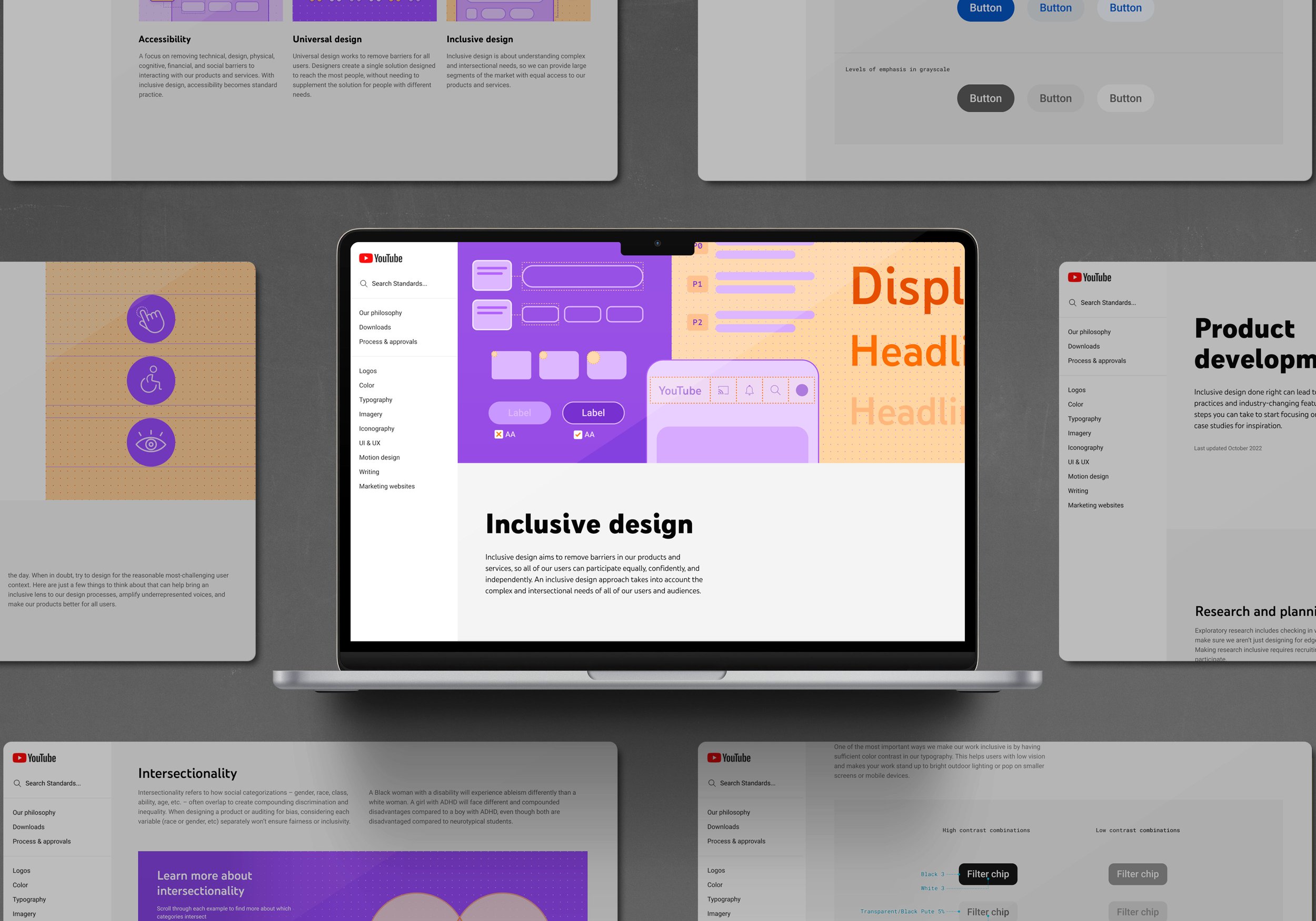
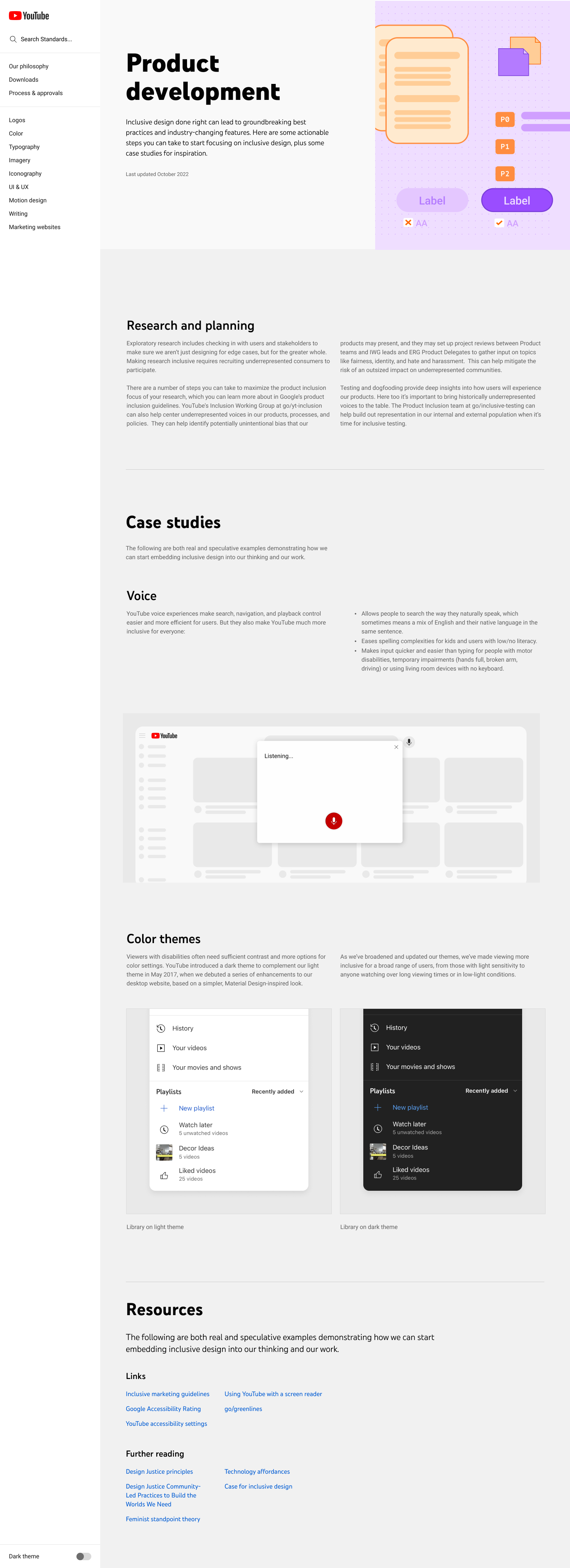
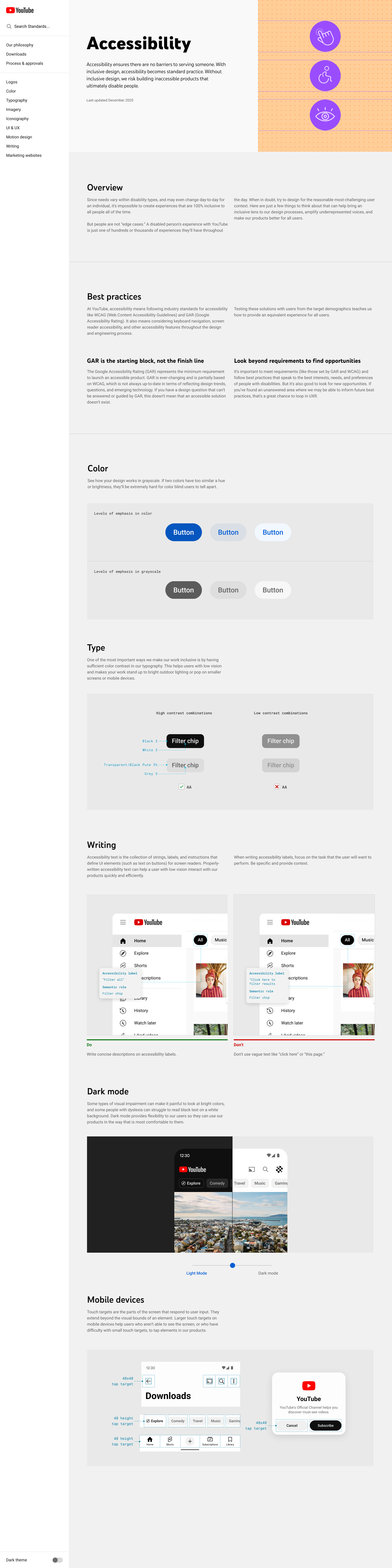
The primary objective was to conceptualize, conduct research, and develop an Inclusive Design chapter for YouTube Standards for the larger YouTube Organization to refer to for foundational guidance and best practices.
This chapter would be a go-to resource for the whole YouTube team, offering essential guidance and the best ways to do things.
We evaluated our success by assessing the enhancement of accessibility and usability of our core experience and the comprehension of the Standards website’s information. Implementing Accessibility and Inclusivity guidelines for engineering and design teams reduced churn by 43%. Our standards became the go-to place for questions, allowing teams to focus on new features and innovation.
Our Process
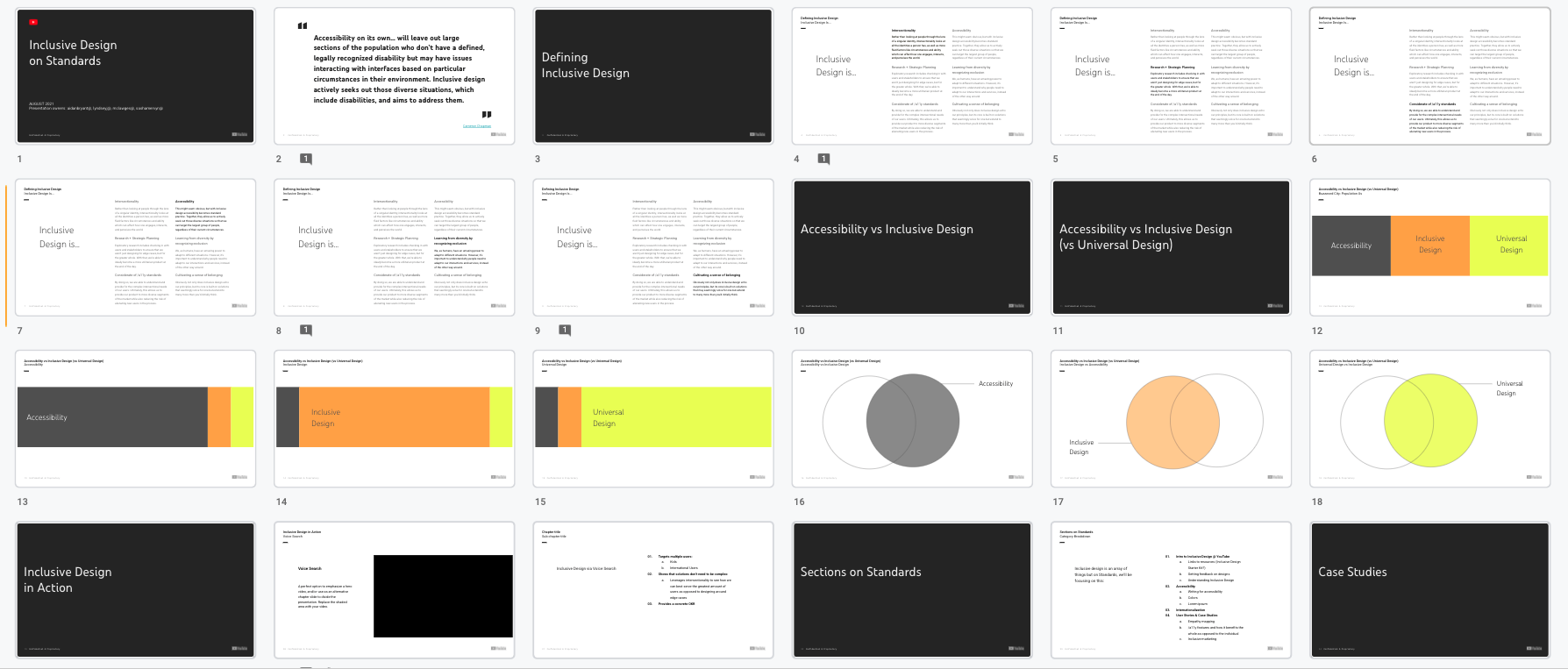
Step 1: Define Inclusive Design The biggest challenge was figuring out how to effectively advocate for design at different levels. I realized that when not everyone is on board with a new idea, you need more than just the work to make it happen meaning I had to learn to advocate not only for the user but for our greater design system as a whole.
Step 2: Research As a founding designer, there’s a delicate balance between being a hands-on contributor creating mockups quickly and a design operations expert when championing a non-existent team. The effort really paid off in the first three months, and I managed to bring on a front-end engineer and a design intern to help make the design vision a reality. It truly takes a village!
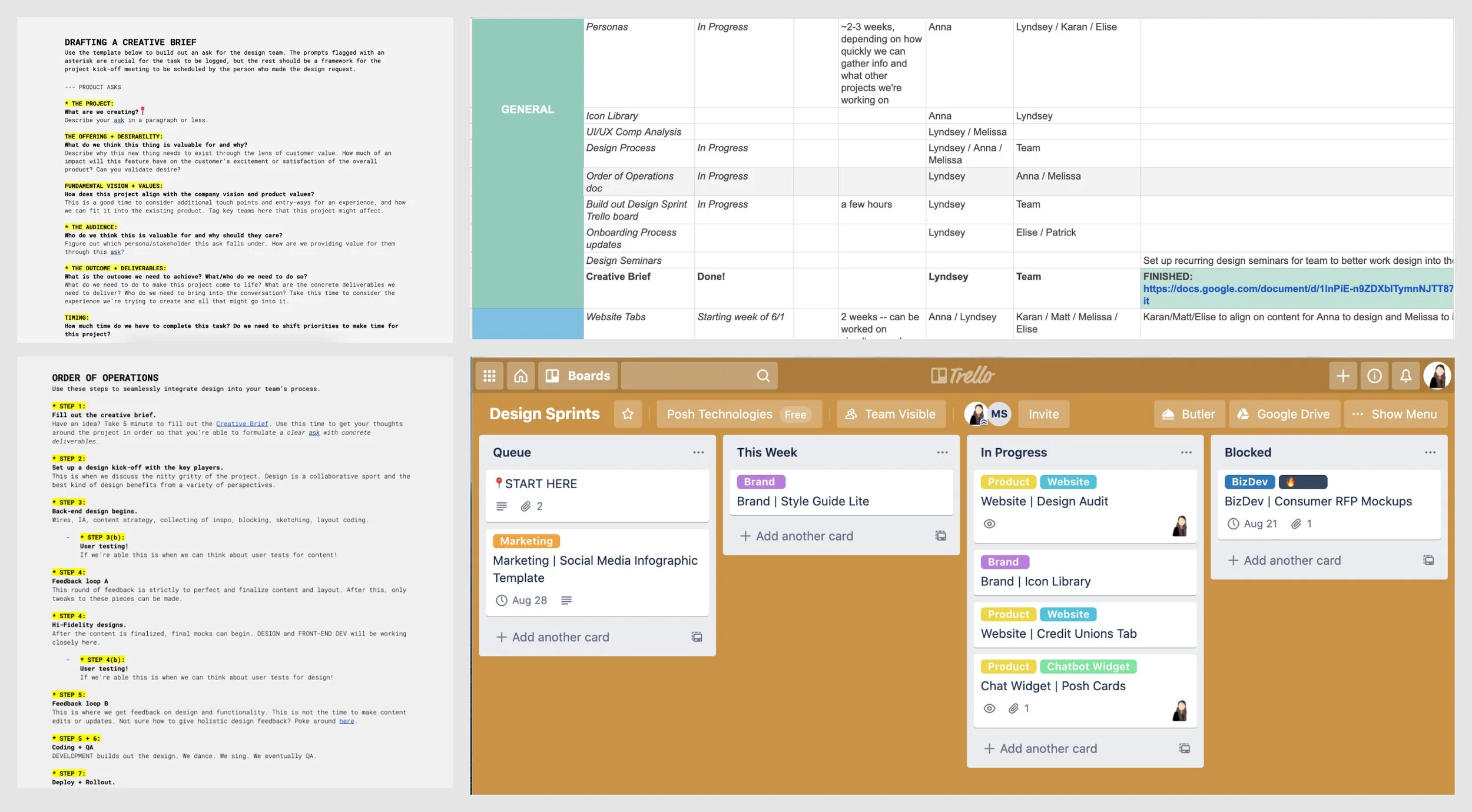
Step 3: Supply Best Practices & Guidelines In my first few months at Posh, I focused on creating communication tools, documentation, briefs, and a Trello-based design ticketing system to avoid adding to the design debt I inherited. By the time I left, I had successfully established a weekly product review and basic brand guidelines for the team, along with a substantial collection of documents including creative briefs, email templates, one-pagers, customer journeys, and detailed customer interview guides.
The key to success here was understanding our team’s needs and product nuances. Our founders were attached to their brand, but it lacked cohesion and scalability. The project and team required a specific touch, relying on ensuring everyone felt heard, seen, and understood.
Design Forums
To ensure our small but strong team of 25 was aligned, I organized weekly Design Forums. These forums kept everyone informed about the design systems foundation I was developing for our brand and the organization. Initially, I hosted them to align everyone on our new brand identity and its application across the product. Eventually, PMs and engineers collaborated on design within their areas and how to better work together to build the Posh brand. This led to teams presenting at Design Forum, which eventually became our company Product Review.
Building the Brand in Stages
Since I was actively advocating for the future of design at Posh, I didn’t want to overwhelm users (or the larger Posh team) with a new design language too quickly. To help ease the transition, I implemented a phased “Crawl > Walk > Run” approach and gradually introducing an updated design language using the Atomic Design System to guide the rollout of new elements.
Role Head of Design
Cross-Functional Partners Engineering, Business Development
Success Metrics percent% success improvement, KPI implementation
All work shown here done by me.